
Why Cabinet Manufacturers Are Moving From PVC to Polypropylene Laminates
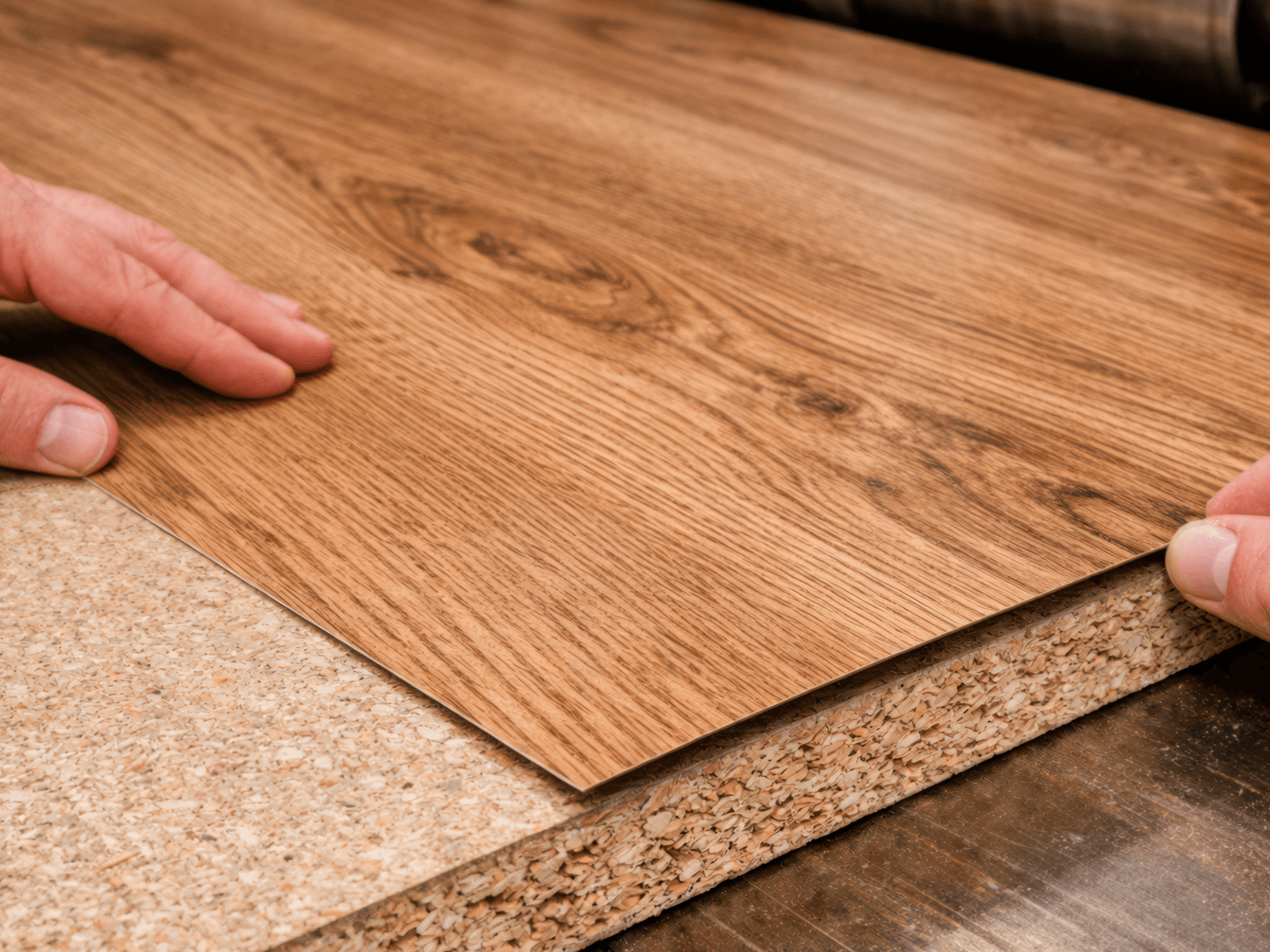
Polypropylene laminate film is a decorative surface layer, laminated onto an engineered substrate like MDF or particleboard under heat and pressure. It’s what gives drawer fronts, cabinet doors, shelving and back panels their finish, along with scratch resistance, moisture resistance and a fingerprint-free surface.
For decades, PVC laminate has been the default choice for that same job. That’s starting to change. Cabinet manufacturers, retailers and specifiers are facing a new layer of scrutiny on what those decorative surfaces are made of. Green building standards, ecolabels and disclosure requirements are putting a spotlight on chemistry that used to sit quietly. Buyers are asking directly: Is it PVC-free? What is the carbon footprint? Does it support LEED?
If you’re specifying or making cabinetry today, that question is coming to your desk soon. It helps to be prepared.
What’s Driving the Shift
Three forces are already reshaping the furniture market, starting in Europe and moving outward:
- Green building standards. LEED and WELL reward material disclosure and restrict phthalate plasticizers in furniture and millwork.
- Ecolabels. Nordic Swan and Blue Angel already exclude PVC and chlorinated plastics from certified furniture.
- Regulatory disclosure. REACH, SCIP and the incoming ESPR are extending chemical disclosure requirements toward furniture. In the US, the EPA has designated vinyl chloride, the PVC monomer, as a high-priority substance under active TSCA risk evaluation.
PVC isn’t banned. But specification standards are clearly heading in this direction, and converting ahead of that curve protects you before it becomes mandatory.
The Chemistry Difference
PP laminate film is made from carbon and hydrogen only. No plasticizers, no PFAS-based processing aids. That composition difference shows up in ways that matter well beyond a spec sheet:
- No plasticizer migration. Nothing to leach or off-gas over the life of the cabinet, which means better indoor air quality and no long-term surprises for your customer.
- Chlorine-free. No dioxin risk in a fire, and none of the SCIP disclosure burden that comes with PVC’s chlorine content.
- Cleaner plant scrap. No chlorine or plasticizer contamination in trim and offcuts, which makes reprocessing simpler in your operations.
- PFAS-free processing throughout.
For a full material-science comparison of PP and PVC across industries, see Profol’s guide, Polypropylene vs. PVC: Comparing Sustainability in Modern Materials.
Performance Holds Up Too
Cleaner chemistry doesn’t mean a performance tradeoff. Side by side, PP laminate film matches or beats PVC on the properties that matter for cabinetry: dimensional stability, water resistance, heat resistance and emboss range are all comparable or better. PP also yields more film per pound, since it’s a lighter material, and it resists nearly all acids, bases and organic solvents at room temperature.
The Environmental Case, With Real Numbers
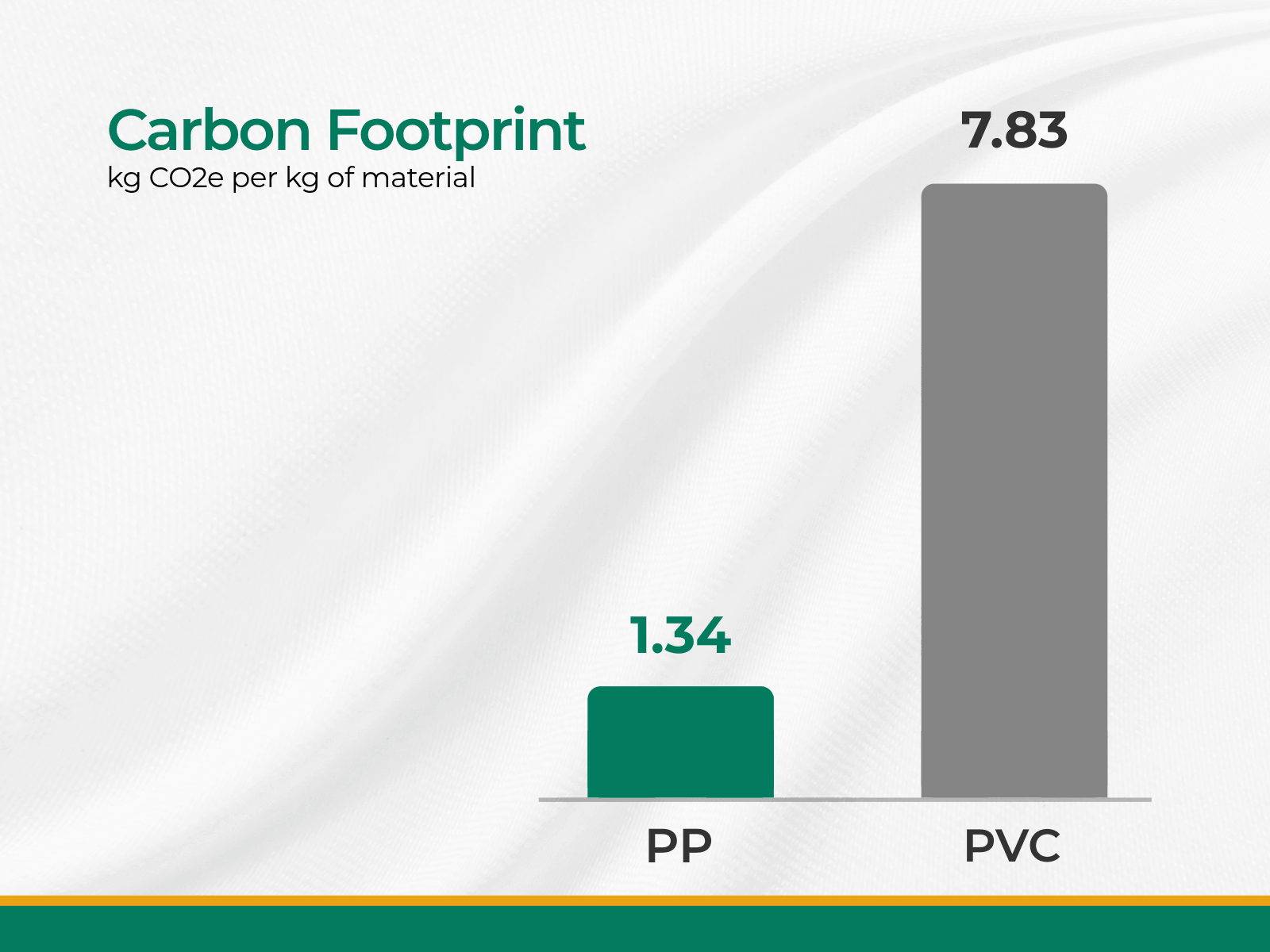
Production-stage carbon emissions tell a clear story: PP resin runs roughly 1.34 kg CO2e per kg, compared with 7.83 kg CO2e per kg for PVC.
This is cradle-to-gate, resin-level data, worth noting since finished-laminate life cycle data doesn’t yet exist publicly for either material. The resin-level gap alone is a meaningful data point for anyone building a sustainability case internally or for customers.
Figures are cradle-to-gate, resin-level data compiled in “Decarbonising the Plastic Industry” (Science of the Total Environment, 2025), drawing on Liang & Yu (2023) for PVC and Alsabri et al. (2022) for PP.
What Conversion Actually Takes
PVC remains the incumbent for a reason. A switch to PP film can call for manufacturing adjustments to tension and pressure to get the results you’re used to. It isn’t always a drop-in swap.
That’s where a film partner should do more than ship rolls. Profol’s R&D team works through challenges before you launch, not after. Profol manufactures PP laminate film for furniture and decorative surfaces with global R&D and manufacturing capability, dedicated R&D lab lines built for rapid customer application testing, and ISO 9001 quality management across our network. If you’re evaluating what a switch would mean for your production, that’s the conversation worth having.
Why This Matters Now
Waiting for a mandate means reacting under pressure, on someone else’s timeline. Converting now gives you time to work out the process details, build the story for your own customers, and get ahead of the specification shift before it becomes mandatory.
Give us your toughest challenge. We’ll give you the best solution.
Reach out to Michael Spicer at mspicer@profol.com.
 powered by