
Why High-Pressure Processing Is Changing Expectations for Bacon Packaging Materials
Rethinking Bacon Boards for Modern Protein Processing
High Pressure Processing (HPP) has become a core food safety and shelf-life strategy for protein processors. As pressures increase—literally and operationally—every component of the packaging system must perform reliably under extreme conditions. That includes a component often taken for granted: the bacon board.
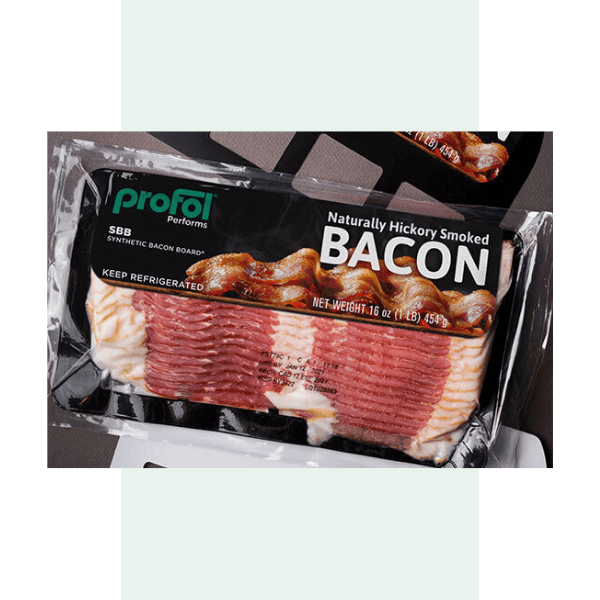
Synthetic Bacon Board® from Profol Americas was developed specifically for modern protein processing environments, including applications where HPP is part of the production flow. For packaging engineers and operations teams, the shift from traditional fiber-based boards to engineered synthetic substrates offers measurable advantages in performance, hygiene, and process consistency.
Why Traditional Boards Fall Short in HPP Environments
Traditional paperboard and corrugated bacon boards were never designed with HPP in mind. Under high pressure, these materials can absorb moisture, deform, delaminate, or shed fibers—introducing risks that directly affect yield, product appearance, and food safety confidence. Wax-coated bacon board products, while intended to resist moisture, still rely on fiber substrates that can fail under extreme pressure.
From an engineering perspective, these failures create downstream issues:
- Inconsistent product presentation after HPP
- Increased risk of contamination from fibers or degraded board structure
- Reduced line efficiency due to handling or quality issues
As HPP adoption expands, the industry needs a board solution that behaves predictably under pressure.
Our Product is Designed to Withstand HPP Conditions
Profol’s Synthetic Bacon Board is a polypropylene packaging solution designed to withstand the physical demands of HPP processing, maintaining structural integrity and dimensional stability throughout the cycle. Because it is made from polypropylene rather than paper-based materials, it does not absorb water, swell, or break down when exposed to pressure and moisture.
For packaging engineers, this translates into:
- Consistent performance through HPP cycles
- Improved stack stability and product alignment
- Reduced risk of board-related defects or downtime
Importantly, the board supports the packaging system without becoming the weak link in a validated HPP process.
Hygiene and Food Safety by Design
Beyond pressure resistance, synthetic boards address another critical concern in protein processing: hygiene.
Polypropylene surfaces are non-porous and do not harbor moisture or fibers, making them inherently cleaner than traditional boards. This helps support sanitation programs and aligns with the expectations of food safety teams evaluating the entire packaging environment—not just the primary package.
Why SQF Certification Matters
Synthetic Bacon Board is produced at Profol Americas’ U.S. manufacturing facility, which is SQF-certified under the Safe Quality Food (SQF) Code.
For packaging engineers and brand owners, SQF certification matters because it:
- Confirms that food safety and quality systems are independently audited
- Ensures traceability, process control, and documented risk management
- Supports supplier approval requirements for protein processors and retailers
- Reduces risk in audits by demonstrating alignment with GFSI-benchmarked standards
In short, SQF certification provides confidence that the board supporting your product meets the same rigor as the rest of your food-contact packaging supply chain.
Operational and Sustainability Benefits
Synthetic Bacon Board also delivers practical benefits beyond HPP compatibility:
- Consistent dimensions and flatness for automated handling
- Stronger durability compared to fiber alternatives
- Reduced waste from damaged or unusable boards
- Made from polypropylene, supporting recyclability pathways where available
For processors evaluating wax vs. polypropylene packaging, these operational benefits often translate into improved uptime, reduced waste, and more predictable performance. For brand owners, these advantages reinforce quality perception while supporting broader sustainability and efficiency goals.
Built for Today’s Protein Processing Reality
HPP is no longer a niche technology—it is a mainstream processing method with real demands on materials and suppliers. Synthetic Bacon Board was developed with this reality in mind, offering packaging engineers a solution that performs under pressure, supports food safety objectives, and integrates cleanly into modern protein operations.
As processors continue to refine their HPP strategies, materials that are designed—not adapted—for the process will increasingly define best practice.
As high-pressure processing becomes a standard part of protein operations, packaging materials must be engineered to perform without compromise. Synthetic Bacon Board offers a proven, purpose-built alternative for processors seeking consistency, hygiene, and reliability under HPP conditions.
Transform Your Bacon Packaging
To evaluate how it fits into your packaging system and operational goals, talk to a packaging specialist.
 powered by